Tuesday, 30 September 2008

Bridging Connections

An initial investigation of Broad Street Basin and bridge, the intersection of rail, road and canal. Linkages and ways in.


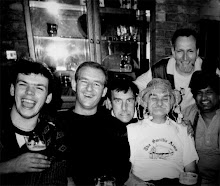
The relationships between rail road and canal in this area brought me to a crucial point, the Broad Street Basin. There is curious mix here of traditional canal activities, the Canal nightclub in the Broad Street Depot and the railway bridge that cuts off the old route of Broad Street into the Wednesfield Road. The Canal, Rail and Ring Road serve as divisions to what is beyond. Perhaps this is due to the removal of the old bridge ( pictured) in the 1970's to the rather generic functional one there now, the same sort of languid bridge design that has prolifereated along our canal system. Perhaps that is why after we pass under this bridge and move toward the station and Horseley Fields, Cambridge Cyclist Campaign earmark it as 'worth avoiding'.
Of course small remaining details become illuminated through the imagination, although you have to work hard past other elements, rather than those elements working together harmoniously. Engaging with this landscape , it is difficult to percieve that sense of specific identity that emerges through, for example, walking along the brewery wall. What is undeniably certain is that this place marks the start of an area intimately connected with the canal and its industries and the lifestyles associated with that.
I'm going back to the story of Bill Lloyd carrying his first bottles of 'smackers' back from the brewery on his first day, along the canal on his bike, or Dennis Groves walking into town after a Saturday morning's work, or even activities such as the May Day parade in Cambridge Street. There was an environment that encourages this activity. Derek Wiggins told me of 'Courtyard Back' housing and walking past washing lines dripping with clothes; that the walk home was full of rich activities that augment the particular experience of this place and set firm memories . I wonder about the same enthusiasm and fondness guilding a conversation of the place today.
What is lacking now is that overt sense of activity and those interconnected detailed experiences of navigating through these passages to and from the Springfield area.

I am aware planned changes are beneficial , but there are further opportunities. The invisible wall created by the railway bridge , canal and ring road on the outskirts of the City Centre could be turned upside down, so that this area becomes synonymous with interconnecting movement and the 'darkness' of the Broad Street Basin turned to 'light'. The intended changes to routes and passageways for cyclists and pedestrians canbe informed to illuminate subtle clues to Wolverhampton's rich identity though the experience of travelling these paths.

The old bridge is now at the Black Country Museum. There may have been structural reasons for its removal, but this is exactly what the place is missing. A route over bridge gave us that insight into how to percieve the landscape, it embodied the sensibilities of Wolverhampton - as we saw it approaching, travelled over it, leaned on it, looked over into the canal on the way to the Union Inn, our activities became intertwined with the place and with the bridge itself. The materials it is made with, its form, colour and possibly the sound it may have made as we travelled over it, allowed us to step within the 'grain' of Wolverhampton and engage with it through recognising the industrial traditions and historical activities intimately tied to this minor place. It was one way in.

Of course we are not coming back from, or going to work from the Brewery, Culwell Foundry, the Steam or Corn Mill. However on those journeys to and from the city centre, to the Interchange, to Springfield and so on, we can go about out daily lives by choosing to enjoy and engage with the city and it rich, complex layers. We can choose to create new ways in. Those new routes can perform and function as the minor route over the bridge did, not simply as something that stops us falling in the water, or something that gets us from A to B in the quickest time possible. Painting and paving can involve so much more.

Within the fabric of these physical connections are other connections and bridges between how we use, how we percieve and how we place ourselves within the city. It is how we connect up those current hidden activities and desires of people in the area to the changing landscape and bring those attributes harmoniously to the surface.

Friday, 26 September 2008

Inter - change

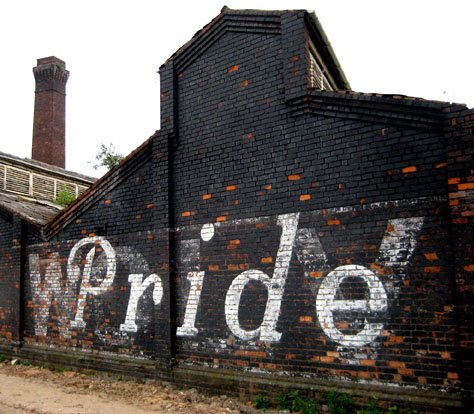
On Entering Wolverhampton. Views, Vistas and the 'Pride of the Midlands'.


On the way to Manchester on the train recently, I looked over toward Springfield. Although the Brewery site remains mostly in stasis with only minor changes happening, activity on the adjacent site was very much underway for the new student accomodation buildings. With the Low Level Station development and the nearby new Interchange, these factors are changing the area, the activities that arise here and how they are linked to the urban landscape.

I've begun to see the importance of this area in relation to entering and exiting Wolverhampton. I'm imagining that workers delivering goods travelling to the brewery, along the rail spur that entered the site, would associate the landscape here with the wider area of Wolverhampton. The activities that would go on here, the characteristic lettering on the wall, signage and so on is very much linked to the passing of trains and narrow boats. These two elements of the canal and rail that follow each other, become very apparent and intertwine here right near the heart of the city.
The views from up high, greeting you as you enter the city are just as important as the activities on the ground. There must be an opportunity here to connect these together through new developments. Almost as if seeing 'PRIDE' on the wall at the Brewery can represent this area again, by how the landscape and its diversely related activities can weld together at this point through acknowledging and reinterpreting the past ethos of the area.
With the new Interchange development hitting the edge of Springfield, the canal corridor and rail, there's opportunities of access points to the canal from the town and vice versa, that will enable activity to penetrate this area, rather than a invisible border that cuts the city centre off at this point.

The question is, how these new developments become realised and contribute to a meaningful place, by being informed by that industrial and social identity that runs through the grain of the city. That sense of 'PRIDE' can only come through recognising the importance of the historical landscape and its past and present related activities, that can allow us to feel part of the story of the city without losing what is so strongly specific about it.


www.wolverhamptoninterchange.co.uk

Tuesday, 29 July 2008

Chimneys, walls, churches, bridges.

notes on a walk around Springfield 29/07/08

Starting to walk at Field street. To my left in the distance , the spires of St Peter’s, to my right between two relatively new small redbrick houses in the cul de sac, a chimney probably a mile away to the North East, around the corner past St Stephens – roof fixing in progress, then the closed butcher's, blue floral patterns and the M&B Freemasons Arms, red bricks and cream lintels. Then up Water Street past uPVC doors, brimming plastic plant pots, to the left the weather faded blue rails of the Community Centre and the main brewery gates straight ahead, framed by the wrought centrepoint iron work ‘SPRNGFIELD BREW’ remaining. Quiet. Eleven- thirty am, the odd car, no pedestrians, background whirring breezy hum. Down Cambridge Street, right – the corner tree lined empty green - raised earth at the edges and untreated wooden chamfered bollards. Opposite the brewery wall recesses alternate blue/black red arches and crossed patterns of buff and blue/black side on and brick end facings. The old cask wash through the top gates, the new road tarmac layed out over the old yard, and past two small workshop chimneys in the foreground framing the taller one at the rear. Wall now on right and left of the road , higher and less ornate. Old workshop grille smears and vent stains. The Mitchells and Butler’s flaking black and white sign repeated around the corner. Out on to the Cannock road, looking over to the boarded up ‘Waggon and Horses’. Quickly into the petrol station to buy a chicken sandwich, money passed under the protective glass screen. Back toward the city and looking east down the railside brewery wall ‘painted august 1959’ in small letters and overlayed pride of ‘ the Midlands’ over ‘Wolverhampton’. Over the riveted bridge watching the ‘Freightliner’ head out and down the gap and steps to the Birmingham Main Line . Heavy drizzle now and looking back over to the white brewery lettering in full view from the towpath. Opposite bank concrete tables then reeds and open views of forklifts milling about. Under the black dripping railway bridge, old worn rope notches and the railway now on my left, red pavoirs and quadrant, bloke catching perch on a spinner, “decent size n’all” through No.2 lock, Carvers advertising cookers in large red letters on the canal wall on a plastic sheet. Under Little’s Lane’s bridge. Heavy clanks of the train slowing to my left, up WOLVERHAMPTON TOP LOCKS, the chubb buildings straight ahead and past the British Waterways depot, on the Wednesfield road now under the bridge- faded paint yellow with red and blue diamonds. Heavy drips, black wet floor. To the right the low level redevelopment and in the distance the Royal Mail office clad in grey panels and red edging. Down Chewell Street drilling and spray jetting, rolling and flattening. Left on to Grimstone past Banks’s depot and noticing the black tiled Grimstone Street sign embedded in the Butler’s brewery wall opposite. Then boarded old office windows and the open structure rusted RSJ’s near to the old malt hoist . The familiar dark lime green of drain piping, the mash tun floor skeleton, valves and wheels. The curved wall, gaps showing the white wall tiles of the copperhouse and back to Cambridge street vents, flues and recessed decorative wall arches.